Working remotely is a thing for some time now, mainly among startups and entrepreneurs, but far along becoming mainstream.
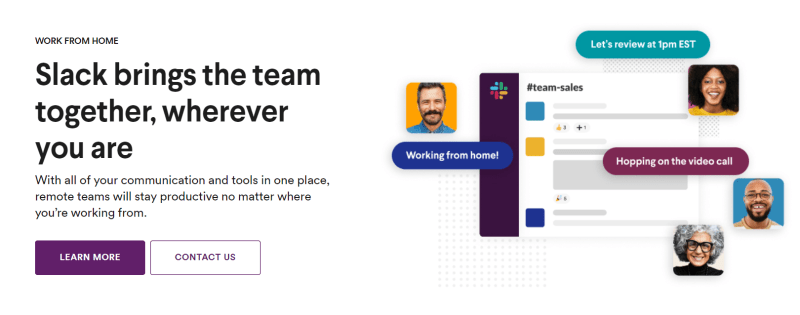
The concept of working remotely has become omnipresent. Everyone is writing guides about it, talking, posting on social media… Tools like Slack are in the backbone of companies and startups communication and remote culture.
Companies that are using Slack, and are agile at the same time, use Slack standup bots that help them succeed in Scrum ceremonies like Daily Standups.
But exactly where can you start? What options and tools you can find?
You know me that I love tinkering with new tools and concepts so if you are interested just read on for 5 minutes.
By the end of this post, you should have a list of go-to tools and standup bots for your everyday agile ceremonies that might put a smile on your face!
Lets see what we discuss here:
How to run a Daily Standup Meeting in Slack
Having said these let’s see what tools can help. There are some daily standup bots and a way to do it on your own in Slack. We will begin with the latter.
1. Run daily standup meetings in Slack (with no standup bot)
Slack offers the ability to run your standup meeting with its vanilla commands. Its a bit cumbersome but you can do it easily.
How to set up a daily standup in Slack
- Choose a channel
- Set up reminders for anyone on the channel to share their updates. Use slack commands to set reminders for that. You can use:

/remind #daily-standups "Hello team @channel, please post your daily reflections:
Things that went awesome yesterday
Things I will be awesome today
Things I need help from the team" every weekday at 9:30
2. Geekbot (free version as well)
Geekbot is a Slack Standup bot (but not only that) to run asynchronous standup meetings. It heavily promotes transparency and self-management among team members.
You can equally easy run, retrospectives, team feedback, reports. You can set Geekbot to run automatically daily standups, collect surveys, share responses, and post updates to your slack channels at the time you want.
They now offer both free and paid plans which are metered by the number of participants. For the free plan, you can have up to 10 participants.

Set the mood of the Geekbot to serious or casual, keep track of the standups and edit them as needed, and always get updated.
What you will like
- You may hold asynchronous meetings.
- It has an intuitive interface, clean set up and good reporting.
- It “speaks” French and Spanish too.
- Geekbot analyzes responses with NLP, so you know understand emotions or help you decide when to step in if workload gets too much.
- Integrates with communication platforms and you can set up advanced workflows.
- It has a free tier!
You will also get great templates about your retrospectives, team well being and many more.
What you will like less
Some people may not like that there is no free tier but that’s it. Oh there is a free tier now!!!!
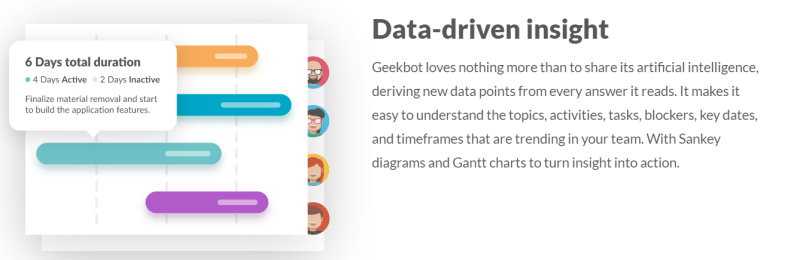
Standup participation percentage, Consecutive streak reports, Out-of-office information and more.
Finally checkout their Conversational Analytics feature. You can ask Geekbot specific questions directly in Slack and Geekbot will search the available data and give you an answer. Check this out

Geekbot Pricing
Geekbot’s pricing is transparent. They offer only one tier with a straight forward price per person, per month. Currently, it is priced at $3.00/month for active participants or $30/year/user (saving 17%).
Check Geekbot pricing.
3. Standuply
Standuply operates asynchronous team surveys and standup meetings through voice, video, and text. It has flexible scheduling options with multi-admin access.
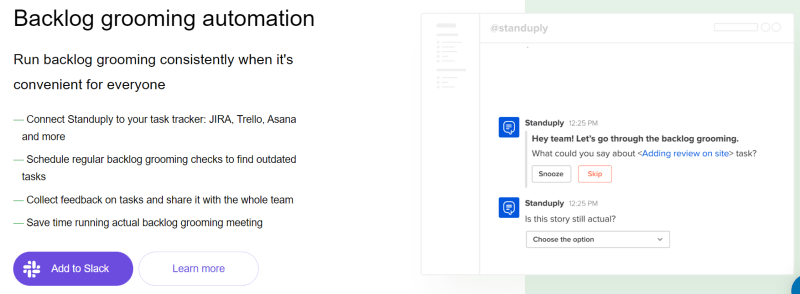
Standuply has many features like recording video messages. Standuply’s Slack Poll feature allows you to set one time or recurring polls if you want.
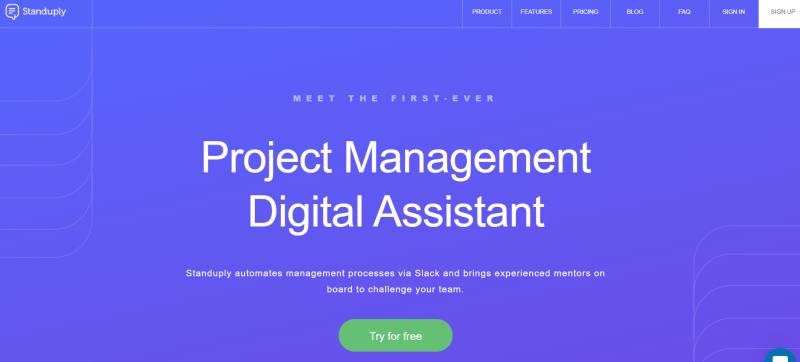
They also offer Standuply Mentors that consists of people partnering with Standuply and answer your questions for a fee.
What you will like
- It is simple to use.
- Has pre-defined report templates.
- You can set up automations for standup, retrospective meetings, planning poker and team motivation check-up.
- Provides access to a pool of experienced mentors.
What you will like less
- Their Price is a bit expensive for some teams.
- Sometimes may become too complicated.
Standuply Pricing
The pricing for Standuply starts at $7.00/month and they offer a free tier. Check Standuply pricing.
4. Dailybot
DailyBot is considered a great option if you intend to track motivation, run daily standups, and analyze your distributed or remote team’s performance. It also integrates with Microsoft Teams and Google Hangouts.
It also lets you configure bot conversations in English, Spanish and Portuguese.
What you will like
- It has a motivation tracker
- It is available in different languages
- It is ideal for any team size
What you will like less
- You cannot edit questions yet.
DailyBot Pricing
While it is free to use, users can pay $1.60 per month to take advantage of its rich features. While for businesses, the price starts at $2.80/month.
Check DailyBot pricing.
5. Olaph
Another Slack standup bot on the list, Olaph aims to bring collaborating teams closer together as well as encourage exchange and communication. You can either use it as a preparation for the actual face-to-face standup or hold it directly into your Slack channel.
It is relatively short on features compared with other tools.
What you will like
- It is easy to use.
- Olaph requires an answer to every question (that’s ok for some).
What you will like less
- It is short of more advanced features.
- No help / support section.
- Olaph requires an answer to every question (that’s not ok for some).
Olaph Pricing
Olaph does not publish any pricing.
6. Standup Alice
Standup Alice is a Slack daily standup bot also designed for running asynchronous meetings. It supports multiple teams and is packed with excellent features, including thread conversation and customized interviews.

What you will like
- It’s the ease of use and setup
- It ensures efficient meetings throughout
- You can keep track of current issues and productivity easily
What you will like less
- It can be spammy sometimes and has basic features that may not cover your use case.
Standup Alice Pricing
Their pricing is a bit hidden. Standup Alice has a monthly subscription fee with a price depending on active users. They also offer a free tier for teams below 4 people.
Check Standup Alice pricing.
7. Standup Jack
Keep your teammates always in the loop and plan a productive day with Standup Jack. It provides you with questions, and everyone’s responses will then be posted on your chosen channel.

What you will like
- It is simple to use.
- It features multiple standups per team.
- It allows you to choose your own questions.
What you will like less
- Some advanced features are not available; hence, might not work for all teams.
Standup Jack Pricing
Standup Jack has a 14 day free trial. After that, you’ll be charged $1.00/user/month. Check Standup Jack pricing.
8. Polly
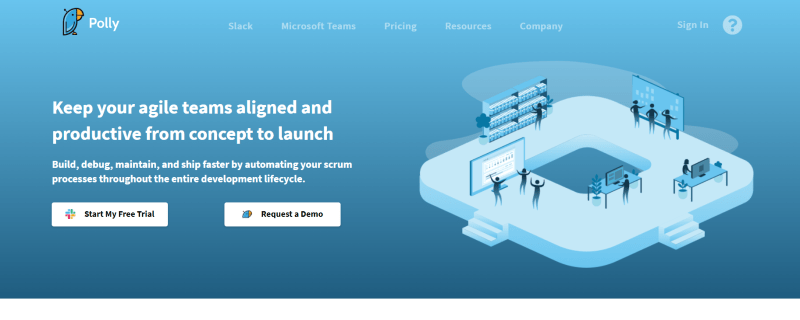
With Polly you can boost team participation with powerful surveys and polls. Although Polly is a polling app you can use it as a daily standup slack bot. You can find more here.
You can use it for your standup or retrospectives and it will help your teams have the required data to enhance work processes and create decisions in a quicker and better way.
What you will like
- It has advanced survey tools and convenient templates.
- It also offers instant insights.
What you will like less
- It is more of a poll bot.
- It is too costly compared with other solutions.
Polly Pricing
Polly offers a free trial and you can start with their Agile plan at $29.00/mo that is ok for small teams. They also have a free plan with basic features. Check Polly pricing.
Too many tools, what should I choose?
If you end up going the Slack standup bot way, as you can see there are options. The most important thing that I would search for though does not reside in a Slack bot feature. Instead, it resides in the company culture. Then comes the tool.
FAQ
What is a Scrum Daily Standup?
One of the most important aspects of running Scrum successfully is to get the agile meetings correct. After conquering that I think you can experiment with better versions of them.
Some would say that the daily standup meeting is the make-it-or-break-it of the Agile ceremonies.
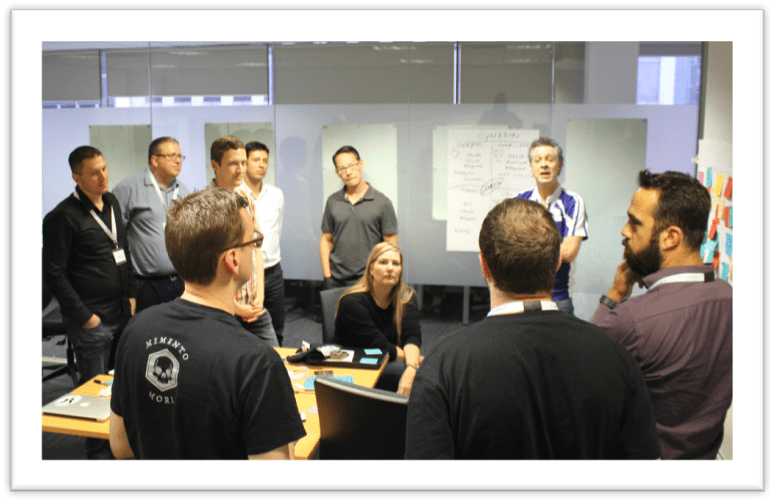
The daily standup or daily scrum is a time boxed-event usually between five and fifteen minutes. It aims to help the team members sync their activities and make a plan for the next twenty-four hours.
The daily standup is one of the ceremonies that can seemingly easily be “replicated” into Slack.
What Is the Purpose of a Daily Standup Meeting?
Let’s face it. Some members don’t like the idea of engaging in the daily standup meeting.
But…
The standup’s purpose, according to agile coach Dave Moran is to help teams understand what’s happening in their sprint. “It should serve as a planning meeting, not a status meeting,” he says.
“[The daily standup] should serve as a planning meeting, not a status meeting,“
Dave Moran – Agile Coach
It also makes the team more successful – promoting better communication, momentum, and focus highly needed to build the right product with the proper quality on time.
Unlike traditional meetings, there will be no postponement happening in case some team members failed to attend the meeting.
Which are the daily standup questions?
In every daily scrum meeting, each team member answers three questions (always have in mind, “It should serve as a planning meeting, not a status meeting”):
- What have I done since yesterday to help my team meet its sprint goal?
- What will I do today?
- What’s currently impeding my progress?
Are there disadvantages of doing daily standups from Slack or a standup bot?
As in everything it also comes with some disadvantages. Some of the most important that I see are:
- The face to face part is important. With Slack its not there. Some people prefer to give verbal updates in weekly staff meetings and people that prefer Slack.
- There may be team members that do not read other team member’s updates in a Slack channel. This is a problem of Slack in general and could cause communication gaps.
 George Psistakis | Fractional Growth | Marketing